
After-school activities

After-school activities are a fundamental part of children’s all-round development. These extracurricular classes or out-of-hours programmes offer a unique opportunity to…
After-school activities: which are the best for your children?
An introduction to after-school activities
After-school activities are a fundamental part of children’s all-round development. Theseextracurricular classes or out-of-hours programmes offer a unique opportunity for children to broaden their skills, explore new areas of interest and stay active. Complementary activities have become an essential tool for children’s all-round development. They not only help improve academic performance; they also build social and emotional skills that will be useful throughout life. These activities provide a space to grow, explore new passions and discover talents in a safe, enjoyable setting.
In this article we will look at the best after-school activities available for your children, theirbenefits, and how to choose the option that best fits each child’s needs and abilities.

Why after-school activities matter
After-school activities serve as a way of channelling a child’s extra energy and have a very positive influence on their development and their physical and mental health:
- They get children exploring different areas and choosing their favourite field. That helps them make decisions for themselves and gradually buildjudgement of their own that will help them be independent in the future.
- After-school activities are essential to realising that winning and losing are part of life. That is a highly valuable lesson, learned through play.
- They offer an opportunity to develop social skills and communication skills, especially for the more introverted.
- Time management is another great lesson learned through a range of complementary activities. Time waits for no one, so children learn toplan their routines effectively as they learn to manage their time.
- After-school activities act as an effective, beneficial break from formal learning and create an excellent opportunity toreduce screen time.
Benefits of after-school activities for children and teenagers
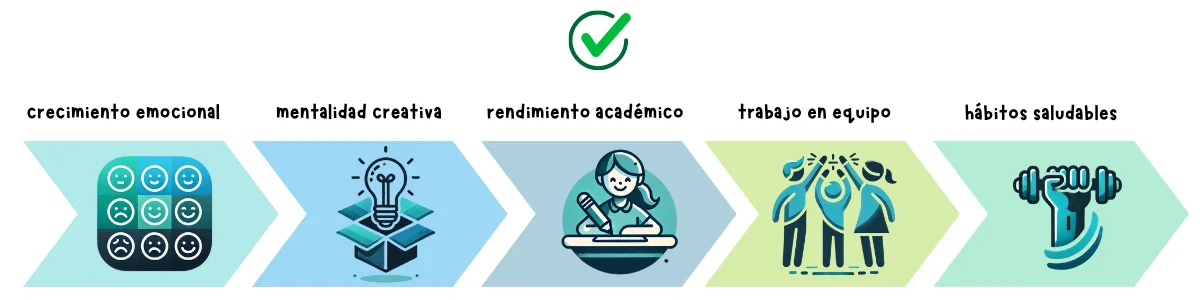
Thebenefits of after-school activities are numerous and go far beyond improving academic performance. Some of the most notable include:
- Encouraging emotional growth: By taking part in activities they enjoy, children experience a boost in self-confidence as they reach goals and overcome challenges.
- Developing a creative mindset: Through activities such as art, sport or technology, children learn to solve problems innovatively and to think creatively.
- Better ability to express themselves: These activities let them discover new ways of expressing their ideas and emotions, which supports the development of their emotional intelligence.
- Improved academic performance: Although it may seem contradictory, many activities such as music or sport help improve concentration and performance in other areas.
- Stronger teamwork: By working with their peers in an after-school setting, children develop skills in cooperation, respect for difference and working together towards common goals.
- Greater overall wellbeing: Enjoying activities they love helps them reduce anxiety and enjoy a more relaxed, informal setting, which improves their physical and mental wellbeing.
- .Building healthy habits: Activities such as sport help maintain an active life, promoting physical and mental wellbeing.
In short, after-school activities are as important as academic education, as well as being a significant need for today’s children who, once lessons finish, often have few spaces in which to meet and spend time with other children.
“There is an overlap between the kinds of skills students can develop through extracurricular activities and those that can help improve academic performance. For example, the ability to work with others, to negotiate a way forward from different perspectives, and effective or varied approaches to communication are skills likely to prove useful in an academic context.”
(Billy Wong, professor of education at the University of Reading)
How to choose the best after-school activities for your children
Choosing the best activities for your children can seem complicated given the sheer range of options available. The first step, though, is toconsider the children’s interests and abilities. Not every activity suits everyone, and it is important to make sure your children enjoy them and feel motivated.
After-school activities by age

Your child’s age is a crucial factor when selecting an after-school activity. As children grow, their interests, abilities and needs change:
- Activities for children aged 3 to 5:
For the youngest children, activities should focus onplay and discovery. Art classes, multisport or craft workshops are excellent options at this age, since they encourage creativity and motor skills. - Activities for children aged 6 to 11:
At this stage children begin to show their interests and abilities more clearly. Sports activities such as football or dance are excellent for physical development and teamwork. In addition,playful, educational activities such as after-school English can help keep up their academic interest in an enjoyable way. - Activities for teenagers aged 12 to 18:
Teenagers can benefit from more specialised activities. Team sports, arts activities (such as drama or dance) and Artificial Intelligence technology programmes are popular options. At this stage it is important to involve teenagers in choosing their activities to encourage their commitment and enthusiasm.
Examples of popular after-school activities
After-school activities can be grouped into several categories according to their focus. Here are some of the most popular options.
- Sports:
Sports activities are not only excellent for physical health and for building a healthy life from childhood; they also teach important lessons aboutteamwork and discipline. Among the most common are football, basketball, volleyball and street dance. - Arts:
For more creative children, arts activities such as painting, crafts or drama are an excellent way to express themselves and develop theiraesthetic sensibility. - Technology:
The world of technology offers a great many options that will also be very useful for the future and will build critical thinking and problem-solving. - Science:
Science workshops are ideal for children interested in discovering how the world works. These activities encourage curiosity and analytical thinking.
Factors to consider when choosing an after-school activity

Before signing your children up for any activity, there are several factors that will help you choose better:
- Personal interests: The most important thing is that the child or teenager likes the activity and wants to do it.
- Timetable and availability: Make sure the activity does not overload the child’s schedule, especially if they already have plenty of academic responsibilities or attend several different activities.
- Cost: Consider the family budget, since some activities can be more expensive than others.
- Location: How close the activity is matters a great deal; ideally it takes place at the school itself.
Case study: Summit360 and its range of after-school activities
AtSummit360 we specialise in offering a wide range ofafter-school activities tailored to each child’s needs and preferences. Our programmes include sports, arts and technology options, all designed to support participants’ all-round development. We also have a team of qualified professionals who guide children through their learning and growth.

Conclusion: the lasting impact of after-school activities
After-school activities play a vital role in the education of children and teenagers. They contribute not only to their academic, physical and emotional development, but also teach them crucial skills they will carry for life. By choosing the right activity you are providing not just entertainment but a great tool for their development, complementing their education.
Make sure you select an activity that not only rounds out your children’s education but also fits their interests, motivation and personality. The possibilities are endless and the benefits lasting!